21 Jul 2026 · Evidence · 8 min read
Dissolving force, without the mysticism
What actually happens when an incoming push seems to vanish — described in terms you can test.
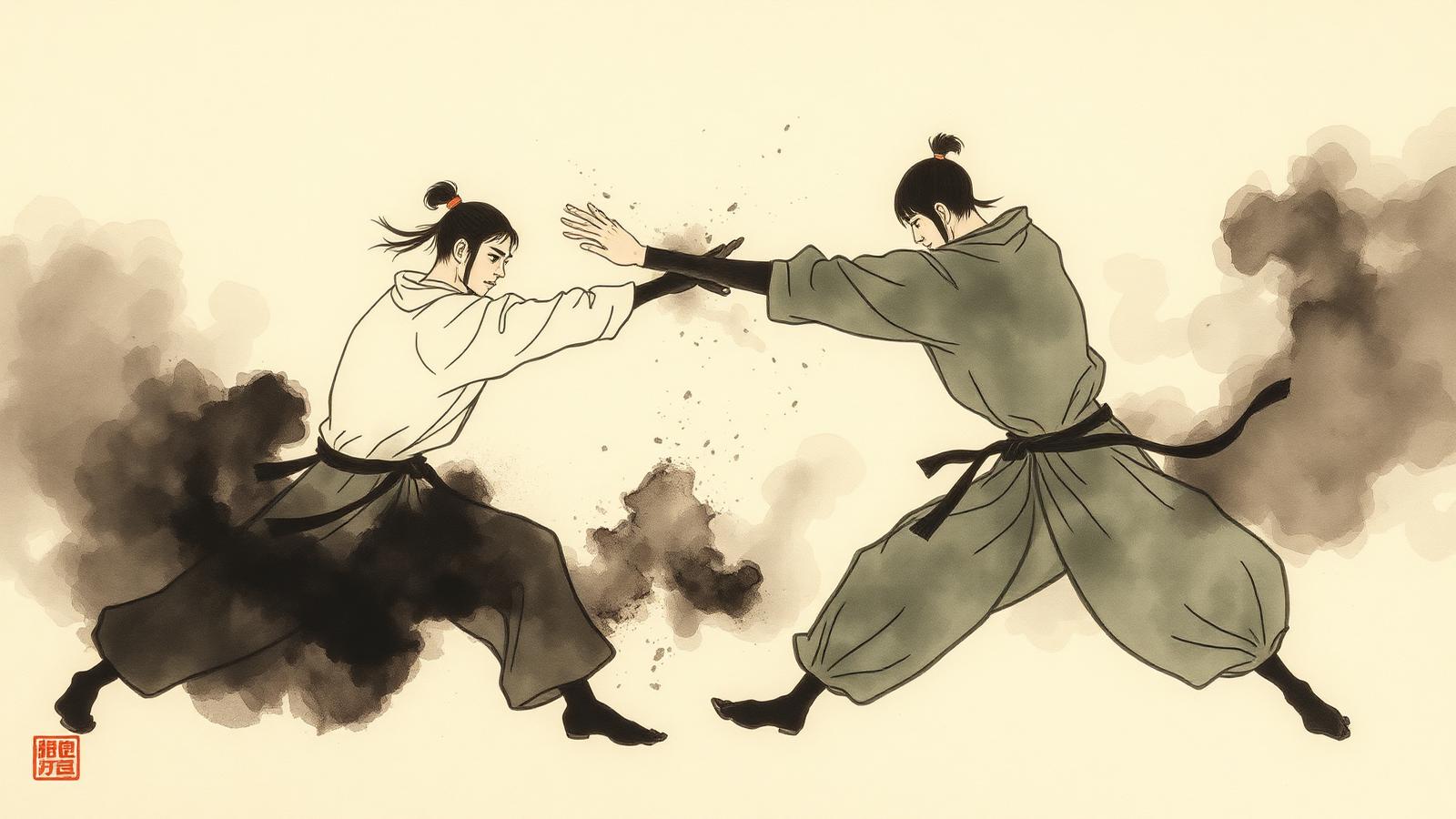
Watch
"Dissolving" is one of those words that either explains everything or nothing, depending on who is using it. Strip the vocabulary away and the phenomenon is concrete, repeatable and, importantly, teachable.
What the partner experiences
A partner pushes into you expecting resistance. They find something else: the contact stays, the direction of their force is preserved, and yet nothing accumulates. Their push arrives somewhere that does not push back and does not run away. Most people describe it as their strength "going nowhere".
What is actually happening
Three things, usually together.
The line is redirected before it loads
The incoming vector is met slightly off-axis, so that the force travels past your structure rather than into it. This happens early — within the first fraction of contact — which is why it looks like nothing happened.
The tension is not there to be pushed
Force needs something stiff to act on. A limb held with the minimum tension required to maintain the shape gives an opponent very little purchase. The moment you brace, you hand them a lever.
The ground path stays intact
While the arm is doing almost nothing, the connection from the contact point through the torso to the rear foot remains organised. You are not soft everywhere — you are soft exactly where they are touching and connected everywhere else.
How to test it honestly
The trap with this material is that a compliant partner will confirm anything. Some rules that keep the practice honest:
- Let the partner choose the timing. If you know when the push comes, you are testing prediction, not dissolving.
- Have them push where they want, not where the drill says.
- Test the failure case. If it never fails, the partner is helping.
- Check it with load. Weight in the hands, or against someone significantly stronger.
None of this requires believing anything unusual about the body. It requires being unusually organised — and being willing to find out, regularly, where the organisation breaks.
New writing, occasionally
Articles and book news, straight to your inbox.